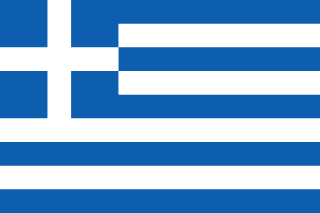
Overview
Greece won independence from the Ottoman Empire in 1830 and became a kingdom. During the second half of the 19th century and the first half of the 20th century, it gradually added neighboring islands and territories, most with Greek-speaking populations. In World War II, Greece was first invaded by Italy (1940) and subsequently occupied by Germany (1941-44); fighting endured in a protracted civil war between supporters of the king and other anti-communist and communist rebels. The communists were defeated in 1949, and Greece joined NATO in 1952. In 1967, a military coup forced the king to flee the country. The ensuing military dictatorship collapsed in 1974, and Greece abolished the monarchy to become a parliamentary republic. In 1981, Greece joined the EC (now the EU); it became the 12th member of the European Economic and Monetary Union in 2001. From 2009 until 2019, Greece suffered a severe economic crisis due to nearly a decade of chronic overspending and structural rigidities. Beginning in 2010, Greece entered three bailout agreements -- the first two with the European Commission, the European Central Bank, and the IMF; and the third in 2015 with the European Stability Mechanism -- worth in total about $300 billion. The Greek Government formally exited the third bailout in 2018, and Greece's economy has since improved significantly. In 2022, the country finalized its early repayment to the IMF and graduated on schedule from the EU's enhanced surveillance framework.
Geography
- Location
- Southern Europe, bordering the Aegean Sea, Ionian Sea, and the Mediterranean Sea, between Albania and Turkey
- Total Area
- 131,957 sq km
- Climate
- temperate; mild, wet winters; hot, dry summers
- Terrain
- mountainous with ranges extending into the sea as peninsulas or chains of islands
- Natural Resources
- lignite, petroleum, iron ore, bauxite, lead, zinc, nickel, magnesite, marble, salt, hydropower potential
- Coastline
- 13,676 km
- Land Borders
- 1,110 km
People & Society
- Population
- 10,424,536 (2025 est.)
- Religions
- Greek Orthodox 81-90%, Muslim 2%, other 3%, none 4-15%, unspecified 1% (2015 est.)
- Ethnic Groups
- Greek 91.6%, Albanian 4.4%, other 4% (2011 est.)
- Life Expectancy
- 81.9 years (2024 est.)
- Urbanization
- 80.7% of total population (2023)
Government
- Government Type
- parliamentary republic
- Capital
- Athens
- Independence
- 3 February 1830 (from the Ottoman Empire)
- Constitution
- many previous; latest entered into force 11 June 1975
- Legal System
- civil legal system based on Roman law
- Executive Branch
- President Konstantinos TASOULAS (since 13 March 2025)
Economy
- Economic Overview
- high-income EU and eurozone economy; growth above euro average, supported by private consumption and EU fund investments; structural reforms strengthening public finances and enhancing resilience within banking system; declining unemployment but low labor productivity and skill shortages
- GDP (Official Rate)
- $257.145 billion (2024 est.)
- Major Industries
- tourism, food and tobacco processing, textiles, chemicals, metal products; mining, petroleum
Infrastructure & Communications
- Railways
- 2,345 km (2020) 731 km electrified