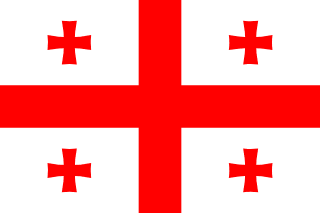
Overview
The region of present-day Georgia once contained the ancient kingdoms of Colchis (known as Egrisi locally) and Kartli-Iberia. The area came under Roman influence in the first centuries A.D., and Christianity became the state religion in the 330s. Persian, Arab, and Turk domination was followed by a Georgian golden age (11th-13th centuries) that was cut short when the Mongols invaded in 1236. Subsequently, the Ottoman and Persian empires competed for influence in the region. Georgia was absorbed into the Russian Empire in the 19th century. Independent for three years (1918-1921) following the Russian revolution, it was forcibly incorporated into the USSR in 1921 and regained its independence when the Soviet Union dissolved in 1991. In 2003, mounting public discontent over rampant corruption, ineffective government services, and a government attempt to manipulate parliamentary elections touched off widespread protests that led to the resignation of Eduard SHEVARDNADZE, who had been president since 1995. In the aftermath of this "Rose Revolution," new elections in 2004 swept Mikheil SAAKASHVILI and his United National Movement (UNM) party into power. SAAKASHVILI made progress on market reforms and governance, but he faced accusations of abuse of office. Progress was further complicated when Russian support for the separatist regions of Abkhazia and South Ossetia led to a five-day conflict between Russia and Georgia in August 2008, which included Russia invading large portions of Georgian territory. Russia initially pledged to pull back from most Georgian territory but then unilaterally recognized the independence of Abkhazia and South Ossetia, and Russian military forces have remained in those regions. Billionaire Bidzina IVANISHVILI's unexpected entry into politics in 2011 brought the divided opposition together under his Georgian Dream coalition, which won a majority of seats in the 2012 parliamentary elections and removed UNM from power. Conceding defeat, SAAKASHVILI named IVANISHVILI as prime minister and left the country after his presidential term ended in 2013. IVANISHVILI voluntarily resigned from office after the presidential succession, and in the years since, the prime minister position has seen frequent turnover. In 2021, SAAKASHVILI returned to Georgia, where he was immediately arrested to serve six years in prison on outstanding abuse-of-office convictions. Popular support for integration with the West is high in Georgia. Joining the EU and NATO are among the country's top foreign policy goals, and Georgia applied for EU membership in 2022, becoming a candidate country in December 2023. Georgia and the EU have a Deep and Comprehensive Free Trade Agreement, and since 2017, Georgian citizens have been able to travel to the Schengen area without a visa.
Geography
- Location
- Southwestern Asia, bordering the Black Sea, between Turkey and Russia, with a sliver of land north of the Caucasus extending into Europe; note - Georgia views itself as part of Europe; geopolitically, it can be classified as falling within Europe, the Middle East, or both
- Total Area
- 69,700 sq km
- Climate
- warm and pleasant; Mediterranean-like on Black Sea coast
- Terrain
- largely mountainous with Great Caucasus Mountains in the north and Lesser Caucasus Mountains in the south; Kolkhet'is Dablobi (Kolkhida Lowland) opens to the Black Sea in the west; Mtkvari River Basin in the east; fertile soils in river valley flood plains and foothills of Kolkhida Lowland
- Natural Resources
- timber, hydropower, manganese deposits, iron ore, copper, minor coal and oil deposits; coastal climate and soils allow for important tea and citrus growth
- Coastline
- 310 km
- Land Borders
- 1,814 km
People & Society
- Population
- 4,900,961 (2024 est.)
- Religions
- Eastern Orthodox Christian (official) 83.4%, Muslim 10.7%, Armenian Apostolic Christian 2.9%, other 1.2% (includes Roman Catholic Christian, Jehovah's Witness, Yazidi, Protestant Christian, Jewish), none 0.5%, unspecified/no answer 1.2% (2014 est.)
- Ethnic Groups
- Georgian 86.8%, Azeri 6.3%, Armenian 4.5%, other 2.3% (includes Russian, Ossetian, Yazidi, Ukrainian, Kist, Greek) (2014 est.)
- Life Expectancy
- 72.8 years (2024 est.)
- Literacy Rate
- 99.7% (2024 est.)
- Urbanization
- 60.7% of total population (2023)
Government
- Government Type
- semi-presidential republic
- Capital
- Tbilisi
- Independence
- 9 April 1991 (from the Soviet Union); notable earlier date: A.D. 1008 (Georgia unified under King BAGRAT III)
- Constitution
- previous 1921, 1978 (based on 1977 Soviet Union constitution); latest approved 24 August 1995, effective 17 October 1995
- Legal System
- civil law system
- Executive Branch
- President Mikheil KAVELASHVILI (since 29 December 2024)
Economy
- Economic Overview
- upper-middle income, fast-growing South Caucasus economy; regionally focused exporter of cars, metal ores, and energy; financial and migrant inflows resulting from Ukraine conflict; EU accession talks suspended over disputed election and foreign influence law; low inflation but persistent high unemployment
- GDP (Official Rate)
- $33.776 billion (2024 est.)
- Major Industries
- steel, machine tools, electrical appliances, mining (manganese, copper, gold), chemicals, wood products, wine
Infrastructure & Communications
- Railways
- 1,363 km (2014)