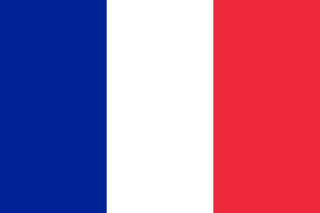
Overview
France today is one of the most modern countries in the world and is a leader among European nations. It plays an influential global role as a permanent member of the United Nations Security Council, NATO, the G-7, the G-20, the EU, and other multilateral organizations. France rejoined NATO's integrated military command structure in 2009, reversing then President Charles DE GAULLE's 1966 decision to withdraw French forces from NATO. Since 1958, it has constructed a hybrid presidential-parliamentary governing system resistant to the instabilities experienced in earlier, more purely parliamentary administrations. In recent decades, its reconciliation and cooperation with Germany have proved central to the economic integration of Europe, including the introduction of a common currency, the euro, in January 1999. In the early 21st century, five French overseas entities -- French Guiana, Guadeloupe, Martinique, Mayotte, and Reunion -- became French regions and were made part of France proper.
Geography
- Location
- metropolitan France: Western Europe, bordering the Bay of Biscay and English Channel, between Belgium and Spain, southeast of the UK; bordering the Mediterranean Sea, between Italy and SpainFrench Guiana: Northern South America, bordering the North Atlantic Ocean, between Brazil and SurinameGuadeloupe: Caribbean, islands between the Caribbean Sea and the North Atlantic Ocean, southeast of Puerto RicoMartinique: Caribbean, island between the Caribbean Sea and North Atlantic Ocean, north of Trinidad and TobagoMayotte: Southern Indian Ocean, island in the Mozambique Channel, about halfway between northern Madagascar and northern MozambiqueReunion: Southern Africa, island in the Indian Ocean, east of Madagascar
- Total Area
- 643,801 sq km ; 551,500 sq km (metropolitan France)
- Climate
- metropolitan France: generally cool winters and mild summers, but mild winters and hot summers along the Mediterranean; occasional strong, cold, dry, north-to-northwesterly wind known as the mistral
- Terrain
- metropolitan France: mostly flat plains or gently rolling hills in north and west; remainder is mountainous, especially Pyrenees in south, Alps in eastFrench Guiana: low-lying coastal plains rising to hills and small mountainsGuadeloupe: Basse-Terre is volcanic in origin with interior mountains; Grande-Terre is low limestone formation; most of the seven other islands are volcanic in originMartinique: mountainous with indented coastline; dormant volcanoMayotte: generally undulating, with deep ravines and ancient volcanic peaksReunion: mostly rugged and mountainous; fertile lowlands along coast
- Natural Resources
- metropolitan France: coal, iron ore, bauxite, zinc, uranium, antimony, arsenic, potash, feldspar, fluorspar, gypsum, timber, arable land, fish; French Guiana: gold deposits, petroleum, kaolin, niobium, tantalum, clay
- Coastline
- 4,853 km
- Land Borders
- 3,956 km
People & Society
- Population
- 68,512,806 (2025 est.)
- Religions
- Roman Catholic 47%, Muslim 4%, Protestant 2%, Buddhist 2%, Orthodox 1%, Jewish 1%, other 1%, none 33%, unspecified 9% (2021 est.)
- Ethnic Groups
- Celtic and Latin with Teutonic, Slavic, North African (Algerian, Moroccan, Tunisian), Indochinese, Basque minorities
- Life Expectancy
- 82.6 years (2024 est.)
- Urbanization
- 81.8% of total population (2023)
Government
- Government Type
- semi-presidential republic
- Capital
- Paris
- Independence
- no official date of independence: 486 (Frankish tribes unified under Merovingian kingship); 10 August 843 (Western Francia established from the division of the Carolingian Empire); 14 July 1789 (French monarchy overthrown); 22 September 1792 (First French Republic established); 4 October 1958 (Fifth French Republic established)
- Constitution
- many previous; latest effective 4 October 1958
- Legal System
- civil law; review of administrative but not legislative acts
- Executive Branch
- President Emmanuel MACRON (since 14 May 2017)
Economy
- Economic Overview
- high-income, advanced EU economy and eurozone member; strong tourism, aircraft manufacturing, pharmaceuticals, and industrial sectors; high public debt; ongoing pension reform efforts; transitioning to a green economy via "France 2030" strategy
- GDP (Official Rate)
- $3.162 trillion (2024 est.)
- Major Industries
- machinery, chemicals, automobiles, metallurgy, aircraft, electronics, textiles, food processing, tourism
Infrastructure & Communications
- Railways
- 27,860 km (2020) 16,660 km electrified