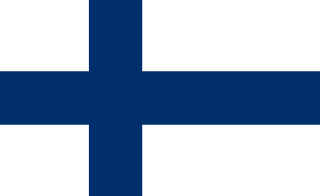
Overview
Finland was a province and then a grand duchy under Sweden from the 12th to the 19th centuries and an autonomous grand duchy of Russia after 1809. It gained complete independence in 1917. During World War II, Finland successfully defended its independence through cooperation with Germany and resisted subsequent invasions by the Soviet Union, albeit with some loss of territory. During the next half-century, Finland transformed from a farm/forest economy to a diversified modern industrial economy; per-capita income is among the highest in Western Europe. A member of the EU since 1995, Finland was the only Nordic state to join the euro single currency at its initiation in January 1999. In the 21st century, the key features of Finland's modern welfare state are high-quality education, promotion of equality, and a national social welfare system, although the system is currently facing the challenges of an aging population and the fluctuations of an export-driven economy. Following Russia's invasion of Ukraine in 2022, Finland opted to join NATO; it became the organization's 31st member in April 2023.
Geography
- Location
- Northern Europe, bordering the Baltic Sea, Gulf of Bothnia, and Gulf of Finland, between Sweden and Russia
- Total Area
- 338,145 sq km
- Climate
- cold temperate; potentially subarctic but comparatively mild because of moderating influence of the North Atlantic Current, Baltic Sea, and more than 60,000 lakes
- Terrain
- mostly low, flat to rolling plains interspersed with lakes and low hills
- Natural Resources
- timber, iron ore, copper, lead, zinc, chromite, nickel, gold, silver, limestone
- Coastline
- 1,250 km
- Land Borders
- 2,563 km
People & Society
- Population
- 5,550,449 (2025 est.)
- Religions
- Lutheran 66.6%, Greek Orthodox 1.1%, other 1.7%, none 30.6% (2022 est.)
- Ethnic Groups
- Finnish, Swedish, Russian, Estonian, Romani, Sami
- Life Expectancy
- 82.2 years (2024 est.)
- Urbanization
- 85.8% of total population (2023)
Government
- Government Type
- parliamentary republic
- Capital
- Helsinki
- Independence
- 6 December 1917 (from Russia)
- Constitution
- previous 1906, 1919; latest drafted 17 June 1997, approved by Parliament 11 June 1999, entered into force 1 March 2000
- Legal System
- civil law system based on the Swedish model
- Executive Branch
- President Alexander STUBB (since 1 March 2024)
Economy
- Economic Overview
- high-income, export-based EU and eurozone economy; major timber, metals, engineering, telecom, and electronics industries; emerging from recession triggered by inflation, weak consumer and export demand, and lower private investment; labor market reform plan to address structural rigidities
- GDP (Official Rate)
- $299.836 billion (2024 est.)
- Major Industries
- metals and metal products, electronics, machinery and scientific instruments, shipbuilding, pulp and paper, foodstuffs, chemicals, textiles, clothing
Infrastructure & Communications
- Railways
- 5,918 km (2020) 3,349 km electrified