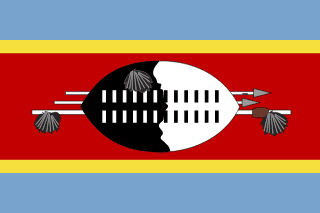
Overview
A Swazi kingdom was founded in the mid-18th century and ruled by a series of kings, including MSWATI II, a 19th century ruler whose name was adopted for the country and its predominant ethnic group. European countries defined the kingdom’s modern borders during the late-19th century, and Swaziland (as it became known) was administered as a UK high commission territory from 1903 until its independence in 1968. A new constitution that came into effect in 2005 included provisions for a more independent parliament and judiciary, but the legal status of political parties remains unclear, and the kingdom is still considered an absolute monarchy. King MSWATI III renamed the country from Swaziland to Eswatini in 2018 to reflect the name most commonly used by its citizens. In 2021, MSWATI III used security forces to suppress prodemocracy protests. A national dialogue and reconciliation process agreed to in the wake of violence has not materialized. In November 2023, King MSWATI III appointed a new prime minister following peaceful national elections. Despite its classification as a lower-middle income country, Eswatini suffers from severe poverty, corruption, and high unemployment. Eswatini has the world's highest HIV/AIDS prevalence rate, although recent years have shown marked declines in new infections. Eswatini is the only country in Africa that recognizes Taiwan.
Geography
- Location
- Southern Africa, between Mozambique and South Africa
- Total Area
- 17,364 sq km
- Climate
- varies from tropical to near temperate
- Terrain
- mostly mountains and hills; some moderately sloping plains
- Natural Resources
- asbestos, coal, clay, cassiterite, hydropower, forests, small gold and diamond deposits, quarry stone, and talc
- Coastline
- 0 km (landlocked)
- Land Borders
- 546 km
People & Society
- Population
- 1,137,268 (2025 est.)
- Languages
- English (official, used for government business), siSwati (official)
- Religions
- Christian 90% (Zionist - a blend of Christianity and traditional African religions - 40%, Roman Catholic 20%, other Christian 30% - includes Anglican, Methodist, Church of Jesus Christ, Jehovah's Witness), Muslim 2%, other 8% (includes Baha'i, Buddhist, Hindu, indigenous, Jewish) (2015 est.)
- Ethnic Groups
- predominantly Swazi; smaller populations of other African ethnic groups, including the Zulu, as well as people of European ancestry
- Life Expectancy
- 60.7 years (2024 est.)
- Literacy Rate
- 90.8% (2022 est.)
- Urbanization
- 24.8% of total population (2023)
Government
- Government Type
- absolute monarchy
- Capital
- Mbabane (administrative capital); Lobamba (royal and legislative capital)
- Independence
- 6 September 1968 (from the UK)
- Constitution
- previous 1968, 1978; latest signed by the king 26 July 2005, effective 8 February 2006
- Legal System
- mixed system of civil, common, and customary law
- Executive Branch
- King MSWATI III (since 25 April 1986)
Economy
- Economic Overview
- landlocked southern African economy; South African trade dependent and currency pegging; CMA and SACU member state; COVID-19 economic slowdown; growing utilities inflation; persistent poverty and unemployment; HIV/AIDS labor force disruptions
- GDP (Official Rate)
- $4.892 billion (2024 est.)
- Major Industries
- soft drink concentrates, coal, forestry, sugar processing, textiles, and apparel
Infrastructure & Communications
- Railways
- 301 km (2014)