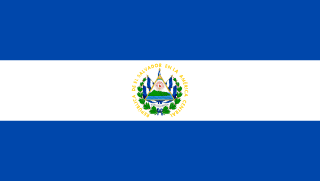
Overview
El Salvador achieved independence from Spain in 1821 and from the Central American Federation in 1839. A 12-year civil war, which cost about 75,000 lives, was brought to a close in 1992 when the government and leftist rebels signed a treaty that provided for military and political reforms. El Salvador is beset by one of the world's highest homicide rates and pervasive criminal gangs.
Geography
- Location
- Central America, bordering the North Pacific Ocean, between Guatemala and Honduras
- Total Area
- 21,041 sq km
- Climate
- tropical; rainy season (May to October); dry season (November to April); tropical on coast; temperate in uplands
- Terrain
- mostly mountains with narrow coastal belt and central plateau
- Natural Resources
- hydropower, geothermal power, petroleum, arable land
- Coastline
- 307 km
- Land Borders
- 590 km
People & Society
- Population
- 6,334,723 (2025 est.)
- Religions
- Roman Catholic 43.9%, Protestant 39.6% (Evangelical - unspecified 38.2%, Evangelical - Methodist 1.3%, Evangelical - Baptist 0.1%), none 16.3%, unspecified 0.2% (2023 est.)
- Ethnic Groups
- Mestizo 86.3%, White 12.7%, Indigenous 0.2% (includes Lenca, Kakawira, Nahua-Pipil), Black 0.1%, other 0.6% (2007 est.)
- Life Expectancy
- 75.9 years (2024 est.)
- Literacy Rate
- 89.8% (2024 est.)
- Urbanization
- 75.4% of total population (2023)
Government
- Government Type
- presidential republic
- Capital
- San Salvador
- Independence
- 15 September 1821 (from Spain)
- Constitution
- many previous; latest drafted 16 December 1983, enacted 23 December 1983
- Legal System
- civil law system with minor common law influence; Supreme Court reviews legislative acts
- Executive Branch
- President Nayib Armando BUKELE Ortez (since 1 June 2019)
Economy
- Economic Overview
- upper-middle-income, dollarized Central American economy; reliant on remittances from US; recent growth linked to infrastructure investment, consumption, and crime reduction; $1.3 billion IMF loan to address fiscal imbalances; Bitcoin adopted as legal tender; persistent poverty and large informal sector
- GDP (Official Rate)
- $35.365 billion (2024 est.)
- Major Industries
- food processing, beverages, petroleum, chemicals, fertilizer, textiles, furniture, light metals
Infrastructure & Communications
- Railways
- 12.5 km (2014)