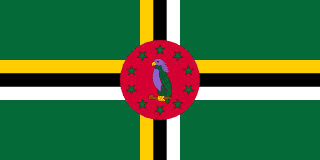
Overview
Dominica was the last of the Caribbean islands to be colonized by Europeans, due chiefly to the fierce resistance of the native Caribs. France ceded possession to Britain in 1763, and Dominica became a British colony in 1805. Slavery ended in 1833, and in 1835, the first three men of African descent were elected to the legislative assembly of Dominica. In 1871, Dominica became first part of the British Leeward Islands and then the British Windward Islands until 1958. In 1967, Dominica became an associated state of the UK, formally taking responsibility for its internal affairs, and the country gained its independence in 1978. In 1980, Dominica's fortunes improved when Mary Eugenia CHARLES -- the first female prime minister in the Caribbean -- replaced a corrupt and tyrannical administration, and she served for the next 15 years. In 2017, Hurricane Maria passed over the island, causing extensive damage to structures, roads, communications, and the power supply, and largely destroying critical agricultural areas.
Geography
- Location
- Caribbean, island between the Caribbean Sea and the North Atlantic Ocean, about halfway between Puerto Rico and Trinidad and Tobago
- Total Area
- 751 sq km
- Climate
- tropical; moderated by northeast trade winds; heavy rainfall
- Terrain
- rugged mountains of volcanic origin
- Natural Resources
- timber, hydropower, arable land
- Coastline
- 148 km
- Land Borders
- 0 km
People & Society
- Population
- 74,661 (2024 est.)
- Languages
- English (official), French patois
- Religions
- Roman Catholic 52.7%, Protestant 29.7% (includes Seventh Day Adventist 6.7%, Pentecostal 6.1%, Baptist 5.2%, Christian Union Church 3.9%, Methodist 2.6%, Gospel Mission 2.1%, other Protestant 3.1%), Jehovah's Witness 1.3%, Rastafarian 1.1%, other 4.3%, none 9.4%, unspecified 1.4% (2011 est.)
- Ethnic Groups
- African descent 84.5%, mixed 9%, Indigenous 3.8%, other 2.1%, unspecified 0.6% (2011 est.)
- Life Expectancy
- 78.7 years (2024 est.)
- Urbanization
- 72% of total population (2023)
Government
- Government Type
- parliamentary republic
- Capital
- Roseau
- Independence
- 3 November 1978 (from the UK)
- Constitution
- previous 1967 (pre-independence); latest presented 25 July 1978, entered into force 3 November 1978
- Legal System
- common law based on the English model
- Executive Branch
- President Sylvanie BURTON (since 2 October 2023)
Economy
- Economic Overview
- highly agrarian OECS island economy; ECCU-member state; large banana exporter; improved oversight of its citizenship-by-investment program; emerging ecotourism, information and communications, and education industries
- GDP (Official Rate)
- $688.881 million (2024 est.)
- Major Industries
- soap, coconut oil, tourism, copra, furniture, cement blocks, shoes