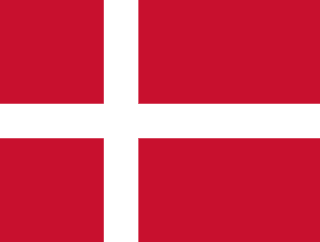
Overview
Once the seat of Viking raiders and later a major north European power, Denmark has evolved into a modern, prosperous nation that is part of the general political and economic integration of Europe. It joined NATO in 1949 and the EEC (now the EU) in 1973. The country has opted out of certain elements of the EU's Maastricht Treaty, including the European Economic and Monetary Union and justice and home affairs issues. a 2022 referendum resulted in the removal of Denmark's 30-year opt-out on defense issues, now allowing Denmark to participate fully in the EU's Common Security and Defense Policy.
Geography
- Location
- Northern Europe, bordering the Baltic Sea and the North Sea, on a peninsula north of Germany (Jutland); also includes several major islands (Sjaelland, Fyn, and Bornholm)
- Total Area
- 43,094 sq km
- Climate
- temperate; humid and overcast; mild, windy winters and cool summers
- Terrain
- low and flat to gently rolling plains
- Natural Resources
- petroleum, natural gas, fish, arable land, salt, limestone, chalk, stone, gravel and sand
- Coastline
- 7,314 km
- Land Borders
- 141 km
People & Society
- Population
- 6,051,491 (2025 est.)
- Religions
- Evangelical Lutheran (official) 71.4%, Muslim 4.3%, other/none/unspecified (denominations include Roman Catholic, Jehovah's Witness, Serbian Orthodox Christian, Jewish, Baptist, Buddhist, Church of Jesus Christ, Pentecostal, and nondenominational Christian) 24.3% (2024 est.)
- Ethnic Groups
- Danish (includes Greenlandic (who are predominantly Inuit) and Faroese) 84.2%, Turkish 1.1%, other 14.7% (largest groups are Polish, Romanian, Syrian, Ukrainian, German, and Iraqi) (2023 est.)
- Life Expectancy
- 82.1 years (2024 est.)
- Urbanization
- 88.5% of total population (2023)
Government
- Government Type
- parliamentary constitutional monarchy
- Capital
- Copenhagen
- Independence
- ca. 965 (unified and Christianized under Harald I GORMSSON); 5 June 1849 (became a parliamentary constitutional monarchy)
- Constitution
- several previous; latest adopted 5 June 1953
- Legal System
- civil law; judicial review of legislative acts
- Executive Branch
- King FREDERIK X (since 14 January 2024)
Economy
- Economic Overview
- high-income, EU-member, trade-oriented Nordic economy; growth driven by pharmaceuticals, energy, and services; large share of employment in public sector; fixed exchange rate pegged to euro; strong fiscal position and declining public debt; tight labor market mitigated by migrant workers and higher retirement age
- GDP (Official Rate)
- $429.457 billion (2024 est.)
- Major Industries
- wind turbines, pharmaceuticals, medical equipment, shipbuilding and refurbishment, iron, steel, nonferrous metals, chemicals, food processing, machinery and transportation equipment, textiles and clothing, electronics, construction, furniture and other wood products
Infrastructure & Communications
- Railways
- 2,682 km (2020) 876 km electrified