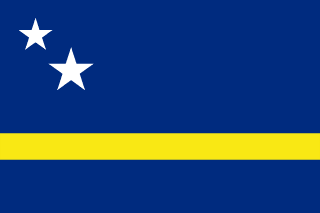
Overview
The original Arawak Indian settlers who arrived on Cura ao from South America in about A.D. 1000 were largely enslaved by the Spanish early in the 16th century and forcibly relocated to other colonies where labor was needed. The Dutch seized Cura ao from the Spanish in 1634. Once the center of the Caribbean slave trade, Cura ao was hard hit economically when the Dutch abolished slavery in 1863. Its prosperity (and that of neighboring Aruba) was restored in the early 20th century with the construction of the Isla Refineria to service the newly discovered Venezuelan oilfields. In 1954, Cura ao and several other Dutch Caribbean colonies were reorganized as the Netherlands Antilles, part of the Kingdom of the Netherlands. In referenda in 2005 and 2009, the citizens of Cura ao voted to become a self-governing country within the Kingdom of the Netherlands. The change in status became effective in 2010 with the dissolution of the Netherlands Antilles.
Geography
- Location
- Caribbean, an island in the Caribbean Sea, 55 km off the coast of Venezuela
- Total Area
- 444 sq km
- Climate
- tropical marine climate, ameliorated by northeast trade winds, results in mild temperatures; semiarid with average rainfall of 60 cm/year
- Terrain
- generally low, hilly terrain
- Natural Resources
- calcium phosphates, protected harbors, hot springs
- Coastline
- 364 km
- Land Borders
- 0 km
People & Society
- Population
- 153,289 (2024 est.)
- Languages
- Papiamento (official) (a creole language that is a mixture of Portuguese, Spanish, Dutch, English, and, to a lesser extent, French, as well as elements of African languages and the language of the Arawak) 80%, Dutch (official) 8.8%, Spanish 5.6%, English (official) 3.1%, other 2.3%, unspecified 0.3% (2011 est.)
- Religions
- Roman Catholic 72.8%, Pentecostal 6.6%, Protestant 3.2%, Adventist 3%, Jehovah's Witness 2%, Evangelical 1.9%, other 3.8%, none 6%, unspecified 0.6% (2011 est.)
- Ethnic Groups
- Curacaoan 75.4%, Dutch 6%, Dominican 3.6%, Colombian 3%, Bonairean, Sint Eustatian, Saban 1.5%, Haitian 1.2%, Surinamese 1.2%, Venezuelan 1.1%, Aruban 1.1%, other 5%, unspecified 0.9% (2011 est.)
- Life Expectancy
- 79.9 years (2024 est.)
- Urbanization
- 89% of total population (2023)
Government
- Government Type
- parliamentary democracy
- Capital
- Willemstad
- Independence
- none (part of the Kingdom of the Netherlands)
- Constitution
- previous 1947, 1955; latest adopted 5 September 2010, entered into force 10 October 2010 (regulates governance of Curacao but is subordinate to the Charter for the Kingdom of the Netherlands)
- Legal System
- based on Dutch civil law
- Executive Branch
- King WILLEM-ALEXANDER of the Netherlands (since 30 April 2013); represented by Governor Lucille A. GEORGE-WOUT (since 4 November 2013)
Economy
- Economic Overview
- high-income island economy; developed infrastructure; tourism and financial services-based economy; investing in information technology incentives; oil refineries service Venezuela and China
- GDP (Official Rate)
- $3.281 billion (2023 est.)
- Major Industries
- tourism, petroleum refining, petroleum transshipment, light manufacturing, financial and business services