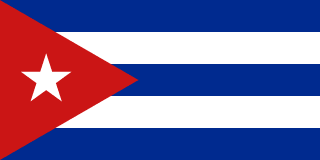
Overview
The native Amerindian population of Cuba began to decline after the arrival of Christopher COLUMBUS in 1492, as the country was developed as a Spanish colony during the next several centuries. Large numbers of African slaves were imported to work the coffee and sugar plantations, and Havana became the launching point for the annual treasure fleets bound for Spain from Mexico and Peru. Spanish rule eventually provoked an independence movement, and occasional rebellions were harshly suppressed. US intervention during the Spanish-American War in 1898 assisted the Cubans in overthrowing Spanish rule. The Treaty of Paris established Cuban independence from Spain in 1898, and after three-and-a-half years of subsequent US military rule, Cuba became an independent republic in 1902. Cuba then experienced a string of governments mostly dominated by the military and corrupt politicians. Fidel CASTRO led a rebel army to victory in 1959; his authoritarian rule held the subsequent regime together for nearly five decades. He handed off the presidency to his younger brother Raul CASTRO in 2008. Cuba's communist revolution, with Soviet support, was exported throughout Latin America and Africa during the 1960s, 1970s, and 1980s. Miguel DIAZ-CANEL Bermudez, hand-picked by Raul CASTRO to succeed him, was approved as president by the National Assembly and took office in 2018. DIAZ-CANEL was appointed First Secretary of the Communist Party in 2021 after the retirement of Raul CASTRO and continues to serve as both president and first secretary. Cuba traditionally and consistently portrays the US embargo, in place since 1961, as the source of its socioeconomic difficulties. As a result of efforts begun in 2014 to reestablish diplomatic relations, the US and Cuba reopened embassies in their respective countries in 2015. The embargo remains in place, however, and the relationship between the US and Cuba remains tense. Illicit migration of Cuban nationals to the US via maritime and overland routes has been a longstanding challenge. In 2017, the US and Cuba signed a Joint Statement ending the so-called "wet-foot, dry-foot" policy, by which Cuban nationals who reached US soil were permitted to stay. Irregular Cuban maritime migration has dropped significantly since 2016, when migrant interdictions at sea topped 5,000, but land border crossings continue.
Geography
- Location
- Caribbean, island between the Caribbean Sea and the North Atlantic Ocean, 150 km south of Key West, Florida
- Total Area
- 110,860 sq km
- Climate
- tropical; moderated by trade winds; dry season (November to April); rainy season (May to October)
- Terrain
- mostly flat to rolling plains, with rugged hills and mountains in the southeast
- Natural Resources
- cobalt, nickel, iron ore, chromium, copper, salt, timber, silica, petroleum, arable land
- Coastline
- 3,735 km
- Land Borders
- 28.5 km
People & Society
- Population
- 10,059,519 (2025 est.)
- Religions
- Christian 58.9%, folk religion 17.6%, Buddhist 1%, Hindu 1%, Jewish 1%, Muslim 1%, other 1%, none 23.2% (2020 est.)
- Ethnic Groups
- White 64.1%, Mulatto or mixed 26.6%, Black 9.3% (2012 est.)
- Life Expectancy
- 80.1 years (2024 est.)
- Literacy Rate
- 97.7% (2019 est.)
- Urbanization
- 77.5% of total population (2023)
Government
- Government Type
- communist state
- Capital
- Havana
- Independence
- 20 May 1902 (from US administration); 10 December 1898 (from Spain); not acknowledged by the Cuban Government as days of independence
- Constitution
- several previous; latest drafted 14 July 2018, approved by the National Assembly 22 December 2018, approved by referendum 24 February 2019
- Legal System
- civil law system based on Spanish civil code
- Executive Branch
- President Miguel DIAZ-CANEL Bermudez (since 19 April 2018)
Economy
- Economic Overview
- still largely state-run planned economy, although privatization increasing under new constitution; widespread protests due to lack of basic necessities and electricity; massive foreign investment increases recently; known tobacco exporter; unique oil-for-doctors relationship with Venezuela; widespread corruption
- GDP (Official Rate)
- $259.781 billion (2024 est.)
- Major Industries
- petroleum, nickel, cobalt, pharmaceuticals, tobacco, construction, steel, cement, agricultural machinery, sugar
Infrastructure & Communications
- Railways
- 8,367 km (2017)