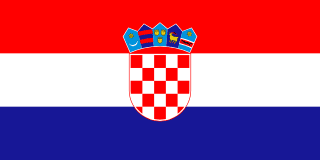
Overview
The lands that today comprise Croatia were part of the Austro-Hungarian Empire until the end of World War I. In 1918, the Croats, Serbs, and Slovenes formed a kingdom known after 1929 as Yugoslavia. Following World War II, Yugoslavia became a federal independent communist state consisting of six socialist republics, including Croatia, under the strong hand of Josip Broz, aka TITO. Although Croatia declared its independence from Yugoslavia in 1991, it took four years of sporadic, but often bitter, fighting before Yugoslav forces were cleared from Croatian lands, along with a majority of Croatia's ethnic Serb population. Under UN supervision, the last Serb-held enclave in eastern Slavonia was returned to Croatia in 1998. The country joined NATO in 2009 and the EU in 2013. In January 2023, Croatia further integrated into the EU by joining the Eurozone and the Schengen Area.
Geography
- Location
- Southeastern Europe, bordering the Adriatic Sea, between Bosnia and Herzegovina and Slovenia
- Total Area
- 56,594 sq km
- Climate
- Mediterranean and continental; continental climate predominant with hot summers and cold winters; mild winters, dry summers along coast
- Terrain
- geographically diverse; flat plains along Hungarian border, low mountains and highlands near Adriatic coastline and islands
- Natural Resources
- oil, some coal, bauxite, low-grade iron ore, calcium, gypsum, natural asphalt, silica, mica, clays, salt, hydropower
- Coastline
- 5,835 km (mainland 1,777 km; islands 4,058 km)
- Land Borders
- 2,237 km
People & Society
- Population
- 4,071,208 (2025 est.)
- Religions
- Roman Catholic 79%, Orthodox 3.3%, Protestant 0.3%, other Christian 4.8%, Muslim 1.3%, other 1.1%, agnostic 1.7%, none or atheist 4.7%, unspecified 3.9% (2021 est.)
- Ethnic Groups
- Croat 91.6%, Serb 3.2%, other 3.9% (including Bosniak, Romani, Albanian, Italian, and Hungarian), unspecified 1.3% (2021 est.)
- Life Expectancy
- 77.7 years (2024 est.)
- Urbanization
- 58.6% of total population (2023)
Government
- Government Type
- parliamentary republic
- Capital
- Zagreb
- Independence
- 25 June 1991 (from Yugoslavia); notable earlier dates: ca. 925 (Kingdom of Croatia established), 1 December 1918 (Kingdom of Serbs, Croats, and Slovenes established, later became Yugoslavia)
- Constitution
- several previous; latest adopted 22 December 1990
- Legal System
- civil law system influenced by legal heritage of Austria-Hungary
- Executive Branch
- President Zoran MILANOVIC (since 18 February 2020)
Economy
- Economic Overview
- upper-middle-income Balkan economy; newest euro user (introduced in 2023); increased investments from EU structural funds and tourism sector contributing to strong but moderating economic growth; declining energy prices and restrictive monetary policy easing inflation; historically low unemployment rate with labor shortages within services and manufacturing sectors
- GDP (Official Rate)
- $92.526 billion (2024 est.)
- Major Industries
- chemicals and plastics, machine tools, fabricated metal, electronics, pig iron and rolled steel products, aluminum, paper, wood products, construction materials, textiles, shipbuilding, petroleum and petroleum refining, food and beverages, tourism
Infrastructure & Communications
- Railways
- 2,617 km (2020) 980 km electrified