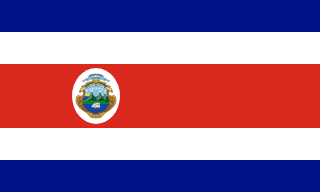
Overview
Although explored by the Spanish early in the 16th century, initial attempts at colonizing Costa Rica proved unsuccessful due to a combination of factors, including disease from mosquito-infested swamps, brutal heat, resistance from Indigenous populations, and pirate raids. It was not until 1563 that a permanent settlement of Cartago was established in the cooler, fertile central highlands. The area remained a colony for some two-and-a-half centuries. In 1821, Costa Rica was one of several Central American provinces that jointly declared independence from Spain. Two years later it joined the United Provinces of Central America, but this federation disintegrated in 1838, at which time Costa Rica proclaimed its sovereignty and independence. Since the late 19th century, only two brief periods of violence have marred the country's democratic development. General Federico TINOCO Granados led a coup in 1917, but the threat of US intervention pushed him to resign in 1919. In 1948, landowner Jose FIGUERES Ferrer raised his own army and rebelled against the government. The brief civil war ended with an agreement to allow FIGUERES to remain in power for 18 months, then step down in favor of the previously elected Otilio ULATE. FIGUERES was later elected twice in his own right, in 1953 and 1970. Costa Rica experienced destabilizing waves of refugees from Central American civil wars in the 1970s and 1980s, but peace in the region has since helped the economy rebound. Although it still maintains a large agricultural sector, Costa Rica has expanded its economy to include strong technology and tourism industries.
Geography
- Location
- Central America, bordering both the Caribbean Sea and the North Pacific Ocean, between Nicaragua and Panama
- Total Area
- 51,100 sq km
- Climate
- tropical and subtropical; dry season (December to April); rainy season (May to November); cooler in highlands
- Terrain
- coastal plains separated by rugged mountains including over 100 volcanic cones, of which several are major active volcanoes
- Natural Resources
- hydropower
- Coastline
- 1,290 km
- Land Borders
- 661 km
People & Society
- Population
- 5,304,932 (2025 est.)
- Religions
- Roman Catholic 47.5%, Evangelical and Pentecostal 19.8%, Jehovah's Witness 1.4%, other Protestant 1.2%, other 3.1%, none 27% (2021 est.)
- Ethnic Groups
- White or Mestizo 83.6%, Mulatto 6.7%, Indigenous 2.4%, Black or African descent 1.1%, other 1.1%, none 2.9%, unspecified 2.2% (2011 est.)
- Life Expectancy
- 80.3 years (2024 est.)
- Urbanization
- 82.6% of total population (2023)
Government
- Government Type
- presidential republic
- Capital
- San Jos
- Independence
- 15 September 1821 (from Spain)
- Constitution
- many previous; latest effective 8 November 1949
- Legal System
- civil law system based on Spanish civil code; Supreme Court reviews legislative acts
- Executive Branch
- President Rodrigo CHAVES Robles (since 8 May 2022)
Economy
- Economic Overview
- trade-based upper middle-income economy; green economy leader, having reversed deforestation; investing in blue economy infrastructure; declining poverty until hard impacts of COVID-19; lingering inequality and growing government debts have prompted a liquidity crisis
- GDP (Official Rate)
- $95.35 billion (2024 est.)
- Major Industries
- medical equipment, food processing, textiles and clothing, construction materials, fertilizer, plastic products
Infrastructure & Communications
- Railways
- 278 km (2014)