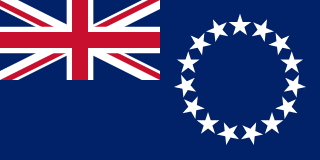
Overview
Polynesians from Tahiti were probably the first people to settle Rarotonga -- the largest of the Cook Islands -- around A.D. 900. Over time, Samoans and Tongans also settled in Rarotonga, and Rarotongans voyaged to the northern Cook Islands, settling Manihiki and Rakahanga. Pukapuka and Penrhyn in the northern Cook Islands were settled directly from Samoa. Prior to European contact, there was considerable travel and trade between inhabitants of the different islands and atolls, but they were not united in a single political entity. Spanish navigators were the first Europeans to spot the northern Cook Islands in 1595, followed by the first landing in 1606, but no further European contact occurred until the 1760s. In 1773, British explorer James COOK spotted Manuae in the southern Cook Islands, and Russian mapmakers named the islands after COOK in the 1820s. Fearing France would militarily occupy the islands as it did in Tahiti, Rarotongans asked the UK for protectorate status in the 1840s and 1860s, a request the UK ignored. In 1888, Queen MAKEA TAKAU of Rarotonga formally petitioned for protectorate status, to which the UK reluctantly agreed. In 1901, the UK placed Rarotonga and the rest of the islands in the New Zealand Colony, and in 1915, the Cook Islands Act organized the islands into one political entity. It remained a protectorate until 1965, when New Zealand granted the Cook Islands self-governing status. The Cook Islands has a great deal of local autonomy and is an independent member of international organizations, but it is in free association with New Zealand, which is responsible for its defense and foreign affairs. In September 2023, the US recognized the Cook Islands as a sovereign and independent state.
Geography
- Location
- Oceania, group of islands in the South Pacific Ocean, about halfway between Hawaii and New Zealand
- Total Area
- 236 sq km
- Climate
- tropical oceanic; moderated by trade winds; a dry season from April to November and a more humid season from December to March
- Terrain
- low coral atolls in north; volcanic, hilly islands in south
- Natural Resources
- coconuts (copra)
- Coastline
- 120 km
- Land Borders
- 0 km
People & Society
- Population
- 7,592 (2025 est.)
- Languages
- English (official) 86.4%, Cook Islands Maori (Rarotongan) (official) 76.2%, other 8.3% (2011 est.)
- Religions
- Protestant 55% (Cook Islands Christian Church 43.1%, Seventh Day Adventist 8.3%, Assemblies of God 3.6%), Roman Catholic 16.7%, Church of Jesus Christ 3.9%, Jehovah's Witness 2.2%, Apostolic Church 2.1%, other 4.5%, none/unspecified 15.6% (2021 est.)
- Ethnic Groups
- Cook Island Maori 77.4%, part Cook Island Maori 8.3%, Fijian 3.6%, New Zealand Maori/European 3.4%, Filipino 2.9%, other Pacific Islands 1.8%, other 2.6% (2021 est.)
- Life Expectancy
- 77.6 years (2024 est.)
- Urbanization
- 76.2% of total population (2023)
Government
- Government Type
- parliamentary democracy
- Capital
- Avarua
- Independence
- 4 August 1965 (Cook Islands became self-governing state in free association with New Zealand)
- Constitution
- 4 August 1965 (Cook Islands Constitution Act 1964)
- Legal System
- common law similar to New Zealand common law
- Executive Branch
- King CHARLES III (since 8 September 2022); represented by Sir Tom J. MARSTERS (since 9 August 2013); New Zealand High Commissioner Catherine GRAHAM (since 8 September 2024)
Economy
- Economic Overview
- high-income self-governing New Zealand territorial economy; tourism-based activity but diversifying; severely curtailed by COVID-19 pandemic; copra and tropical fruit exporter; Asian Development Bank aid recipient
- GDP (Official Rate)
- $409.077 million (2024 est.)
- Major Industries
- fishing, fruit processing, tourism, clothing, handicrafts