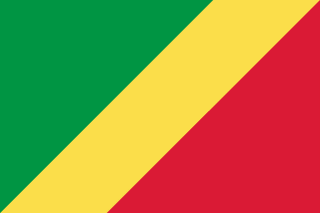
Overview
Upon independence in 1960, the former French region of Middle Congo became the Republic of the Congo. From 1968 to 1992, the country was named the People s Republic of the Congo. A quarter-century of experimentation with Marxism was abandoned in 1990, and a democratically elected government took office in 1992, at which time the country reverted to "the Republic of the Congo" name. A two-year civil war that ended in 1999 restored to power former President Denis SASSOU-Nguesso, who had ruled from 1979 to 1992. A new constitution adopted three years later provided for a multi-party system and a seven-year presidential term, and the next elections retained SASSOU-Nguesso. After a year of renewed fighting, SASSOU-Nguesso and southern-based rebel groups agreed to a final peace accord in 2003. SASSOU-Nguesso was reelected in 2009 and, after passing a constitutional referendum allowing him to run for additional terms, was reelected again in 2016 and 2021. The Republic of the Congo is one of Africa's largest petroleum producers.
Geography
- Location
- Central Africa, bordering the South Atlantic Ocean, between Angola and Gabon
- Total Area
- 342,000 sq km
- Climate
- tropical; rainy season (March to June); dry season (June to October); persistent high temperatures and humidity; particularly enervating climate astride the Equator
- Terrain
- coastal plain, southern basin, central plateau, northern basin
- Natural Resources
- petroleum, timber, potash, lead, zinc, uranium, copper, phosphates, gold, magnesium, natural gas, hydropower
- Coastline
- 169 km
- Land Borders
- 5,554 km
People & Society
- Population
- 6,097,665 (2024 est.)
- Religions
- Roman Catholic 33.1%, Awakening Churches/Christian Revival 22.3%, Protestant 19.9%, Salutiste 2.2%, Muslim 1.6%, Kimbanguist 1.5%, other 8.1%, none 11.3% (2007 est.)
- Ethnic Groups
- Kongo (Bakongo) 40.5%, Teke 16.9%, Mbochi 13.1%, foreigner 8.2%, Sangha 5.6%, Mbere/Mbeti/Kele 4.4%, Punu 4.3%, Pygmy 1.6%, Oubanguiens 1.6%, Duma 1.5%, Makaa 1.3%, other and unspecified 1% (2014-15 est.)
- Life Expectancy
- 72.9 years (2024 est.)
- Urbanization
- 69.2% of total population (2023)
Government
- Government Type
- presidential republic
- Capital
- Brazzaville
- Independence
- 15 August 1960 (from France)
- Constitution
- several previous; latest approved by referendum 25 October 2015
- Legal System
- mixed system of French civil law and customary law
- Executive Branch
- President Denis SASSOU-Nguesso (since 1997)
Economy
- Economic Overview
- primarily an oil- and natural resources-based economy; recovery from mid-2010s oil devaluation has been slow and curtailed by COVID-19; extreme poverty increasing, particularly in southern rural regions; attempting to implement recommended CEMAC reforms; increasing likelihood of debt default
- GDP (Official Rate)
- $15.72 billion (2024 est.)
- Major Industries
- petroleum extraction, cement, lumber, brewing, sugar, palm oil, soap, flour, cigarettes
Infrastructure & Communications
- Railways
- 510 km (2014)