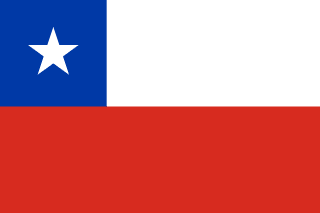
Overview
Indigenous groups inhabited central and southern Chile for several thousand years, living in mixed pastoralist and settled communities. The Inca then ruled the north of the country for nearly a century prior to the arrival of the Spanish in the 16th century. In 1541, the Spanish established the Captaincy General of Chile, which lasted until Chile declared its independence in 1810. The subsequent struggle with the Spanish became tied to other South American independence conflicts, with a decisive victory not being achieved until 1818. In the War of the Pacific (1879-83), Chile defeated Peru and Bolivia to win its current northernmost regions. By the 1880s, the Chilean central government cemented its control over the central and southern regions inhabited by Mapuche Indigenous peoples. Between 1891 and 1973, a series of elected governments succeeded each other until the Marxist government of Salvador ALLENDE was overthrown in 1973 in a military coup led by General Augusto PINOCHET, who ruled until a democratically elected president was inaugurated in 1990. Economic reforms that were maintained consistently since the 1980s contributed to steady growth, reduced poverty rates by over half, and helped secure the country's commitment to democratic and representative government. Chile has increasingly assumed regional and international leadership roles befitting its status as a stable, democratic nation.
Geography
- Location
- Southern South America, bordering the South Pacific Ocean, between Argentina and Peru
- Total Area
- 756,102 sq km
- Climate
- temperate; desert in north; Mediterranean in central region; cool and damp in south
- Terrain
- low coastal mountains, fertile central valley, rugged Andes in east
- Natural Resources
- copper, timber, iron ore, nitrates, precious metals, molybdenum, hydropower
- Coastline
- 6,435 km
- Land Borders
- 7,801 km
People & Society
- Population
- 19,091,343 (2025 est.)
- Religions
- Catholic 57%, none 25.7%, Evangelical or Protestant 16.2%, other Christians and traditions related to Christ 1.3%; less than 1%: Buddhist, Catholic Orthodox, Church of Jesus Christ of Latter-Day Saints, Islam, Judaism, other religions, no religion (2024)
- Ethnic Groups
- White and non-Indigenous 88.9%, Mapuche 9.1%, Aymara 0.7%, other Indigenous groups 1% (includes Rapa Nui, Likan Antai, Quechua, Colla, Diaguita, Kawesqar, Yagan or Yamana), unspecified 0.3% (2012 est.)
- Life Expectancy
- 80.3 years (2024 est.)
- Literacy Rate
- 96.4% (2017 est.)
- Urbanization
- 88% of total population (2023)
Government
- Government Type
- presidential republic
- Capital
- Santiago; note - Valparaiso is the seat of the national legislature
- Independence
- 18 September 1810 (from Spain)
- Constitution
- many previous; latest adopted 11 September 1980, effective 11 March 1981; in September 2022 and again in December 2023, referendums presented for a new constitution were both defeated, and the September 1980 constitution remains in force
- Legal System
- civil law system influenced by several Western European civil legal systems; Constitutional Tribunal reviews legislative acts
- Executive Branch
- President Gabriel BORIC (since 11 March 2022)
Economy
- Economic Overview
- export-driven economy; leading copper producer; though hit by COVID-19, fairly quick rebound from increased liquidity and rapid vaccine rollouts; decreasing poverty but still lingering inequality; public debt rising but still manageable; recent political violence has had negative economic consequences
- GDP (Official Rate)
- $330.267 billion (2024 est.)
- Major Industries
- copper, lithium, other minerals, foodstuffs, fish processing, iron and steel, wood and wood products, transport equipment, cement, textiles
Infrastructure & Communications
- Railways
- 7,281.5 km (2014)