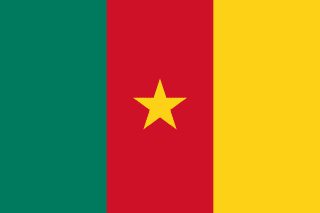
Overview
Powerful chiefdoms ruled much of the area of present-day Cameroon before it became a German colony known as Kamerun in 1884. After World War I, the territory was divided between France and the UK as League of Nations mandates. French Cameroon became independent in 1960 as the Republic of Cameroon. The following year, the southern portion of neighboring British Cameroon voted to merge with the new country to form the Federal Republic of Cameroon. In 1972, a new constitution replaced the federation with a unitary state, the United Republic of Cameroon. The country has generally enjoyed stability, which has enabled the development of agriculture, roads, and railways, as well as a petroleum industry. Nonetheless, unrest and violence in the country's two western, English-speaking regions have persisted since 2016. Movement toward democratic reform is slow, and political power remains firmly in the hands of President Paul BIYA.
Geography
- Location
- Central Africa, bordering the Bight of Biafra, between Equatorial Guinea and Nigeria
- Total Area
- 475,440 sq km
- Climate
- varies with terrain, from tropical along coast to semiarid and hot in north
- Terrain
- diverse, with coastal plain in southwest, dissected plateau in center, mountains in west, plains in north
- Natural Resources
- petroleum, bauxite, iron ore, timber, hydropower
- Coastline
- 402 km
- Land Borders
- 5,018 km
People & Society
- Population
- 31,518,954 (2025 est.)
- Religions
- Roman Catholic 33.1%, Muslim 30.6%, Protestant 27.1% other Christian 6.1%, animist 1.3%, other 0.7%, none 1.2% (2022 est.)
- Ethnic Groups
- Bamileke-Bamu 22.2%, Biu-Mandara 16.4%, Arab-Choa/Hausa/Kanuri 13.5%, Beti/Bassa, Mbam 13.1%, Grassfields 9.9%, Adamawa-Ubangi, 9.8%, Cotier/Ngoe/Oroko 4.6%, Southwestern Bantu 4.3%, Kako/Meka 2.3%, foreign/other ethnic group 3.8% (2022 est.)
- Life Expectancy
- 64.2 years (2024 est.)
- Literacy Rate
- 72.6% (2018 est.)
- Urbanization
- 59.3% of total population (2023)
Government
- Government Type
- presidential republic
- Capital
- Yaounde
- Independence
- 1 January 1960 (from French-administered UN trusteeship)
- Constitution
- several previous; latest effective 18 January 1996
- Legal System
- mixed system of English common law, French civil law, and customary law
- Executive Branch
- President Paul BIYA (since 6 November 1982)
Economy
- Economic Overview
- largest CEMAC economy with many natural resources; recent political instability and terrorism reducing economic output; systemic corruption; poor property rights enforcement; increasing poverty in northern regions
- GDP (Official Rate)
- $51.327 billion (2024 est.)
- Major Industries
- petroleum production and refining, aluminum production, food processing, light consumer goods, textiles, lumber, ship repair
Infrastructure & Communications
- Railways
- 987 km (2014)