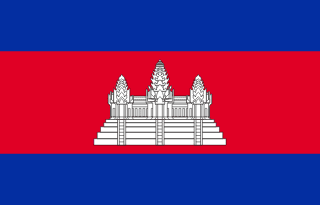
Overview
Most Cambodians consider themselves to be Khmers, descendants of the Angkor Empire that extended over much of Southeast Asia and reached its zenith between the 10th and 13th centuries. Attacks by the Thai and Cham (from present-day Vietnam) weakened the empire, ushering in a long period of decline. The king placed the country under French protection in 1863, and it became part of French Indochina in 1887. Following Japanese occupation in World War II, Cambodia gained full independence from France in 1953. In 1975, after a seven-year struggle, communist Khmer Rouge forces captured Phnom Penh and evacuated all cities and towns. At least 1.5 million Cambodians died from execution, forced hardships, or starvation during the Khmer Rouge regime under POL POT. A 1978 Vietnamese invasion drove the Khmer Rouge into the countryside, began a 10-year Vietnamese occupation, and touched off 13 years of internecine warfare in which a coalition of Khmer Rouge, Cambodian nationalists, and royalist insurgents, with assistance from China, fought the Vietnamese-backed People’s Republic of Kampuchea (PRK). The 1991 Paris Agreements ended the country’s civil war and mandated democratic elections, which took place in 1993 and ushered in a period of multi-party democracy with a constitutional monarchy. King Norodom SIHANOUK was reinstated as head of state, and the Cambodian People's Party (CPP) and the royalist FUNCINPEC party formed a coalition government. Nevertheless, the power-sharing arrangement proved fractious and fragile, and in 1997, a coup led by CPP leader and former PRK prime minister HUN SEN dissolved the coalition and sidelined FUNCINPEC. Despite further attempts at coalition governance, the CPP has since remained in power through elections criticized for lacking fairness, political and judicial corruption, media control, and influence over labor unions, all of which have been enforced with violence and intimidation. HUN SEN remained as prime minister until 2023, when he transferred power to his son, HUN MANET. HUN SEN has subsequently maintained considerable influence as the leader of the CPP and the Senate. The CPP has also placed limits on civil society, press freedom, and freedom of expression. Despite some economic growth and considerable investment from China over the past decade, Cambodia remains one of East Asia's poorest countries.The remaining elements of the Khmer Rouge surrendered in 1999. A UN-backed special tribunal established in Cambodia in 1997 tried some of the surviving Khmer Rouge leaders for crimes against humanity and genocide. The tribunal concluded in 2022 with three convictions.
Geography
- Location
- Southeastern Asia, bordering the Gulf of Thailand, between Thailand, Vietnam, and Laos
- Total Area
- 181,035 sq km
- Climate
- tropical; rainy, monsoon season (May to November); dry season (December to April); little seasonal temperature variation
- Terrain
- mostly low, flat plains; mountains in southwest and north
- Natural Resources
- oil and gas, timber, gemstones, iron ore, manganese, phosphates, hydropower potential, arable land
- Coastline
- 443 km
- Land Borders
- 2,530 km
People & Society
- Population
- 17,230,333 (2025 est.)
- Religions
- Buddhist (official) 97.1%, Muslim 2%, Christian 0.3%, other 0.5% (2019 est.)
- Ethnic Groups
- Khmer 95.4%, Cham 2.4%, Chinese 1.5%, other 0.7% (2019-20 est.)
- Life Expectancy
- 71.4 years (2024 est.)
- Literacy Rate
- 71.9% (2021 est.)
- Urbanization
- 25.6% of total population (2023)
Government
- Government Type
- parliamentary constitutional monarchy
- Capital
- Phnom Penh
- Independence
- 9 November 1953 (from France)
- Constitution
- previous 1947; latest promulgated 21 September 1993
- Legal System
- civil law system (influenced by the UN Transitional Authority in Cambodia), customary law, Communist legal theory, and common law
- Executive Branch
- King Norodom SIHAMONI (since 29 October 2004)
Economy
- Economic Overview
- one of the fastest growing Southeast Asian economies; rebounding tourism and clothing exports; substantial manufacturing and construction sectors; new trade agreements expanding agricultural markets; significant public debt; investing in new ports and roads
- GDP (Official Rate)
- $46.353 billion (2024 est.)
- Major Industries
- tourism, garments, construction, rice milling, fishing, wood and wood products, rubber, cement, gem mining, textiles
Infrastructure & Communications
- Railways
- 642 km (2014)