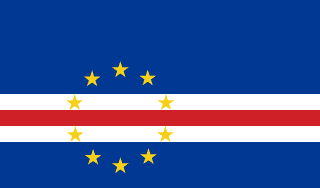
Overview
The Portuguese discovered and colonized the uninhabited islands of Cabo Verde in the 15th century; Cabo Verde subsequently became a trading center for African slaves and later an important coaling and resupply stop for whaling and transatlantic shipping. The fusing of European and various African cultural traditions is reflected in Cabo Verde’s Crioulo language, music, and pano textiles. After gaining independence in 1975, a one-party system was established and maintained until multi-party elections were held in 1990. Cabo Verde continues to sustain one of Africa's most stable democratic governments and relatively stable economies, maintaining a currency pegged first to the Portuguese escudo and then to the euro since 1998. Repeated droughts during the second half of the 20th century caused significant hardship and prompted heavy emigration. As a result, Cabo Verde's expatriate population -- concentrated in Boston, Massachusetts and Western Europe -- is greater than its domestic one. Most Cabo Verdeans have both African and Portuguese antecedents. Cabo Verde’s population descends from its first permanent inhabitants in the late 15th-century -- a preponderance of West African slaves, a small share of Portuguese colonists, and even fewer Italians and Spaniards. Among the nine inhabited islands, population distribution is varied. The islands in the east are very dry and are home to the country's growing tourism industry. The more western islands receive more precipitation and support larger populations, but agriculture and livestock grazing have damaged their soil fertility and vegetation. For centuries, the country’s overall population size has fluctuated significantly, as recurring periods of famine and epidemics have caused high death tolls and emigration.
Geography
- Location
- Western Africa, group of islands in the North Atlantic Ocean, west of Senegal
- Total Area
- 4,033 sq km
- Climate
- temperate; warm, dry summer; precipitation meager and erratic
- Terrain
- steep, rugged, rocky, volcanic
- Natural Resources
- salt, basalt rock, limestone, kaolin, fish, clay, gypsum
- Coastline
- 965 km
- Land Borders
- 0 km
People & Society
- Population
- 611,014 (2024 est.)
- Languages
- Portuguese (official), Crioulo (a Portuguese-based creole language with two main dialects)
- Religions
- Roman Catholic 72.5%, Protestant 4% (includes Adventist 1.9%, Nazarene 1.8%, Assembly of God 0.2%, God is Love 0.1%), Christian Rationalism 1.7%, Muslim 1.3%, Jehovah's Witness 1.2%, Church of Jesus Christ 1%, other Christian 1.3%, other 1.2%, none 15.6%, no response 0.4% (2021 est.)
- Ethnic Groups
- Creole (Mulatto) 71%, African 28%, European 1%
- Life Expectancy
- 74.3 years (2024 est.)
- Literacy Rate
- 88.5% (2024 est.)
- Urbanization
- 68% of total population (2023)
Government
- Government Type
- parliamentary republic
- Capital
- Praia
- Independence
- 5 July 1975 (from Portugal)
- Constitution
- previous 1981; latest effective 25 September 1992
- Legal System
- civil law system of Portugal
- Executive Branch
- President Jose Maria Pereira NEVES (since 9 November 2021)
Economy
- Economic Overview
- stable, middle-income, developing island economy; strong GDP growth led by tourism sector recovery; sustained poverty reduction through PEDS II development plan; high reliance on foreign remittances and aid to finance external debt
- GDP (Official Rate)
- $2.768 billion (2024 est.)
- Major Industries
- food and beverages, fish processing, shoes and garments, salt mining, ship repair