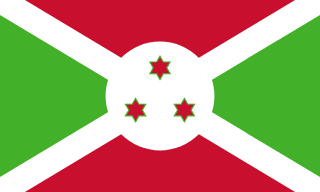
Overview
Established in the 1600s, the Burundi Kingdom has had borders similar to those of modern Burundi since the 1800s. Burundi’s two major ethnic groups, the majority Hutu and minority Tutsi, share a common language and culture and largely lived in peaceful cohabitation under Tutsi monarchs in pre-colonial Burundi. Regional, class, and clan distinctions contributed to social status in the Burundi Kingdom, yielding a complex class structure. German colonial rule in the late 19th and early 20th centuries and Belgian rule after World War I preserved Burundi’s monarchy. Seeking to simplify administration, Belgian colonial officials reduced the number of chiefdoms and eliminated most Hutu chiefs from positions of power. In 1961, the Burundian Tutsi king’s oldest son, Louis RWAGASORE, was murdered by a competing political faction shortly before he was set to become prime minister, triggering increased political competition that contributed to later instability. Burundi gained its independence from Belgium in 1962 as the Kingdom of Burundi. Revolution in neighboring Rwanda stoked ethnic polarization as the Tutsi increasingly feared violence and loss of political power. A failed Hutu-led coup in 1965 triggered a purge of Hutu officials and set the stage for Tutsi officers to overthrow the monarchy in 1966 and establish a Tutsi-dominated republic. A Hutu rebellion in 1972 resulted in the deaths of several thousand Tutsi civilians and sparked brutal Tutsi-led military reprisals against Hutu civilians which ultimately killed 100,000-200,000 people. International pressure led to a new constitution in 1992 and democratic elections in 1993. Tutsi military officers feared Hutu domination and assassinated Burundi's first democratically elected president, Hutu Melchior NDADAYE, in 1993 after only 100 days in office, sparking a civil war. In 1994, his successor, Cyprien NTARYAMIRA, died when the Rwandan president’s plane he was traveling on was shot down, which triggered the Rwandan genocide and further entrenched ethnic conflict in Burundi. The internationally brokered Arusha Agreement, signed in 2000, and subsequent cease-fire agreements with armed movements ended the 1993-2005 civil war. Burundi’s second democratic elections were held in 2005, resulting in the election of Pierre NKURUNZIZA as president. He was reelected in 2010 and again in 2015 after a controversial court decision allowed him to circumvent a term limit. President Evariste NDAYISHIMIYE -- from NKURUNZIZA’s ruling party -- was elected in 2020.
Geography
- Location
- Central Africa, east of the Democratic Republic of the Congo, west of Tanzania
- Total Area
- 27,830 sq km
- Climate
- equatorial; high plateau with considerable altitude variation (772 m to 2,670 m above sea level); average annual temperature varies with altitude from 23 to 17 degrees Celsius but is generally moderate; average annual rainfall is about 150 cm with two wet seasons (February to May and September to November) and two dry seasons (June to August and December to January)
- Terrain
- hilly and mountainous, dropping to a plateau in east, some plains
- Natural Resources
- nickel, uranium, rare earth oxides, peat, cobalt, copper, platinum, vanadium, arable land, hydropower, niobium, tantalum, gold, tin, tungsten, kaolin, limestone
- Coastline
- 0 km (landlocked)
- Land Borders
- 1,140 km
People & Society
- Population
- 13,590,102 (2024 est.)
- Religions
- Christian 93.9% (Roman Catholic 58.6%, Protestant 35.3% [includes Adventist 2.7% and other Protestant religions 32.6%]), Muslim 3.4%, other 1.3%, none 1.3% (2016-17 est.)
- Ethnic Groups
- Hutu, Tutsi, Twa, South Asian
- Life Expectancy
- 68.1 years (2024 est.)
- Literacy Rate
- 71.4% (2020 est.)
- Urbanization
- 14.8% of total population (2023)
Government
- Government Type
- presidential republic
- Capital
- Gitega (political capital), Bujumbura (commercial capital)
- Independence
- 1 July 1962 (from UN trusteeship under Belgian administration)
- Constitution
- several previous, ratified by referendum 28 February 2005
- Legal System
- mixed legal system of Belgian civil law and customary law
- Executive Branch
- President Evariste NDAYISHIMIYE (since 18 June 2020)
Economy
- Economic Overview
- highly agrarian, low-income Sub-Saharan economy; declining foreign assistance; increasing fiscal insolvencies; dense and still growing population; COVID-19 weakened economic recovery and flipped two years of deflation
- GDP (Official Rate)
- $2.162 billion (2024 est.)
- Major Industries
- light consumer goods (sugar, shoes, soap, beer); cement, assembly of imported components; public works construction; food processing (fruits)