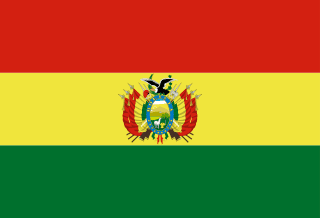
Overview
Bolivia, named after independence fighter Simón BOLÍVAR, broke away from Spanish rule in 1825. Much of its subsequent history has consisted of a series of coups and countercoups, with the last coup occurring in 1980. Democratic civilian rule was established in 1982, but leaders have faced problems of deep-seated poverty, social unrest, and illegal drug production. In 2005, Bolivians elected Movement Toward Socialism leader Evo MORALES as president -- by the widest margin of any leader since 1982 -- after he ran on a promise to change the country's traditional political class and empower the poor and indigenous majority. In 2009 and 2014, MORALES easily won reelection, and his party maintained control of the legislative branch. In 2016, MORALES narrowly lost a referendum to approve a constitutional amendment that would have allowed him to compete in the 2019 presidential election. A subsequent Supreme Court ruling stating that term limits violate human rights provided the justification for MORALES to run despite the referendum, but rising violence, pressure from the military, and widespread allegations of electoral fraud ultimately forced him to flee the country. An interim government, led by President Jeanine AÑEZ Chávez, held new elections in 2020, and Luis Alberto ARCE Catacora was elected president.
Geography
- Location
- Central South America, southwest of Brazil
- Total Area
- 1,098,581 sq km
- Climate
- varies with altitude; humid and tropical to cold and semiarid
- Terrain
- rugged Andes Mountains with a highland plateau (Altiplano), hills, lowland plains of the Amazon Basin
- Natural Resources
- lithium, tin, natural gas, petroleum, zinc, tungsten, antimony, silver, iron, lead, gold, timber, hydropower
- Coastline
- 0 km (landlocked)
- Land Borders
- 7,252 km
People & Society
- Population
- 12,436,103 (2025 est.)
- Religions
- Roman Catholic 65%, Protestant 19.6% (Evangelical (non-specific) 11.9%, Evangelical Baptist 2.1%, Evangelical Pentecostal 1.8%, Evangelical Methodist 0.7%, Adventist 2.8%, Protestant (non-specific) 0.3%), Believer (not belonging to the church) 0.9%, other 4.8%, atheist 1.7%, agnostic 0.6%, none 6.1%, unspecified 1.3% (2023 est.)
- Ethnic Groups
- Mestizo (mixed White and Indigenous ancestry) 68%, Indigenous 20%, White 5%, Cholo/Chola 2%, African descent 1%, other 1%, unspecified 3%; 44% other Indigenous group, predominantly Quechua or Aymara (2009 est.)
- Life Expectancy
- 72.5 years (2024 est.)
- Literacy Rate
- 95.6% (2023 est.)
- Urbanization
- 71.2% of total population (2023)
Government
- Government Type
- presidential republic
- Capital
- La Paz (administrative capital); Sucre (constitutional [legislative and judicial] capital)
- Independence
- 6 August 1825 (from Spain)
- Constitution
- many previous; latest drafted 6 August 2006 to 9 December 2008, approved by referendum 25 January 2009, effective 7 February 2009
- Legal System
- civil law system with influences from Roman, Spanish, canon (religious), French, and ethnic groups' pre-colonial law
- Executive Branch
- President Rodrigo PAZ Pereira (since 8 November 2025)
Economy
- Economic Overview
- resource-rich economy benefits during commodity booms; has bestowed juridical rights to Mother Earth, impacting extraction industries; increasing Chinese lithium mining trade relations; hard hit by COVID-19; increased fiscal spending amid poverty increases; rampant banking and finance corruption
- GDP (Official Rate)
- $49.668 billion (2024 est.)
- Major Industries
- mining, smelting, electricity, petroleum, food and beverages, handicrafts, clothing, jewelry
Infrastructure & Communications
- Railways
- 3,960 km (2019)