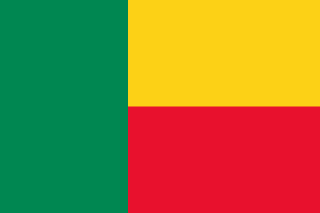
Overview
Present-day Benin is comprised of about 42 ethnic groups, including the Yoruba in the southeast, who migrated from what is now Nigeria in the 12th century; the Dendi in the north-central area, who came from Mali in the 16th century; the Bariba and the Fula in the northeast; the Ottamari in the Atakora mountains; the Fon in the area around Abomey in the south-central area; and the Mina, Xueda, and Aja, who came from Togo, on the coast. The Kingdom of Dahomey emerged on the Abomey plateau in the 17th century and was a regional power for much of the 18th and 19th centuries. The growth of Dahomey coincided with the growth of the Atlantic slave trade, and it became known as a major source of enslaved people. France began to control the coastal areas of Dahomey in the second half of the 19th century; the entire kingdom was conquered by 1894. French Dahomey achieved independence in 1960, and it changed its name to the Republic of Benin in 1975.A succession of military governments ended in 1972 with the rise to power of Mathieu KEREKOU and a Marxist-Leninist government. A move to representative government began in 1989. Two years later, free elections ushered in former Prime Minister Nicephore SOGLO as president, marking the first successful transfer of power in Africa from a dictatorship to a democracy. KEREKOU returned to power after elections in 1996 and 2001. He stepped down in 2006 and was succeeded by Thomas YAYI Boni, a political outsider and independent, who won a second term in 2011. Patrice TALON, a wealthy businessman, took office in 2016; the space for pluralism, dissent, and free expression has narrowed under his administration. TALON won a second term in 2021.
Geography
- Location
- Western Africa, bordering the Bight of Benin, between Nigeria and Togo
- Total Area
- 112,622 sq km
- Climate
- tropical; hot, humid in south; semiarid in north
- Terrain
- mostly flat to undulating plain; some hills and low mountains
- Natural Resources
- small offshore oil deposits, limestone, marble, timber
- Coastline
- 121 km
- Land Borders
- 2,123 km
People & Society
- Population
- 15,186,090 (2025 est.)
- Languages
- 55 languages; French (official); Fon (a Gbe language), Yom (a Gur language) and Yoruba are the most important indigenous languages in the south; half a dozen regionally important languages in the north, including Bariba and Fulfulde
- Religions
- Muslim 27.7%, Roman Catholic 25.5%, Protestant 13.5% (Celestial 6.7%, Methodist 3.4%, other Protestant 3.4%), Vodoun 11.6%, other Christian 9.5%, other traditional religions 2.6%, other 2.6%, none 5.8% (2013 est.)
- Ethnic Groups
- Fon and related 38.4%, Adja and related 15.1%, Yoruba and related 12%, Bariba and related 9.6%, Fulani and related 8.6%, Ottamari and related 6.1%, Yoa-Lokpa and related 4.3%, Dendi and related 2.9%, other 0.9%, foreigner 1.9% (2013 est.)
- Life Expectancy
- 63 years (2024 est.)
- Literacy Rate
- 51.4% (2022 est.)
- Urbanization
- 50.1% of total population (2023)
Government
- Government Type
- presidential republic
- Capital
- Porto-Novo (constitutional capital); Cotonou (seat of government)
- Independence
- 1 August 1960 (from France)
- Constitution
- previous 1946, 1958 (pre-independence); latest adopted by referendum 2 December 1990, promulgated 11 December 1990
- Legal System
- civil law system modeled largely on the French system and some customary law
- Executive Branch
- President Patrice TALON (since 6 April 2016)
Economy
- Economic Overview
- robust economic growth; slightly declining but still widespread poverty; strong trade relations with Nigeria; cotton exporter; COVID-19 has led to capital outflows and border closures; WAEMU member with currency pegged to the euro; recent fiscal deficit and debt reductions
- GDP (Official Rate)
- $21.483 billion (2024 est.)
- Major Industries
- textiles, food processing, construction materials, cement
Infrastructure & Communications
- Railways
- 438 km (2014)