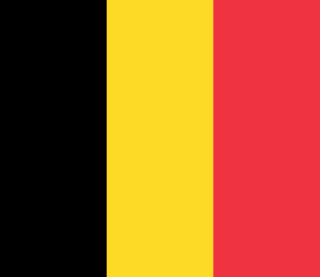
Overview
Belgium became independent from the Netherlands in 1830; it was occupied by Germany during World Wars I and II. The country prospered as a modern, technologically advanced European state and member of NATO and the EU. In recent years, longstanding tensions between the Dutch-speaking Flemish of the north and the French-speaking Walloons of the south have led to constitutional amendments granting these regions formal recognition and autonomy. The capital city of Brussels is home to numerous international organizations, including the EU and NATO.
Geography
- Location
- Western Europe, bordering the North Sea, between France and the Netherlands
- Total Area
- 30,528 sq km
- Climate
- temperate; mild winters, cool summers; rainy, humid, cloudy
- Terrain
- flat coastal plains in northwest, central rolling hills, rugged mountains of Ardennes Forest in southeast
- Natural Resources
- construction materials, silica sand, carbonates, arable land
- Coastline
- 66.5 km
- Land Borders
- 1,297 km
People & Society
- Population
- 11,960,170 (2025 est.)
- Religions
- Roman Catholic 57.1%, Protestant 2.3%, other Christian, 2.8%, Muslim 6.8%, other 1.7%, atheist 9.1%, nonbeliever/agnostic 20.2% (2018 est.)
- Ethnic Groups
- Belgian 75.2%, Italian 4.1%, Moroccan 3.7%, French 2.4%, Turkish 2%, Dutch 2%, other 10.6% (2012 est.)
- Life Expectancy
- 82.3 years (2024 est.)
- Urbanization
- 98.2% of total population (2023)
Government
- Government Type
- federal parliamentary democracy under a constitutional monarchy
- Capital
- Brussels
- Independence
- 4 October 1830 (a provisional government declared independence from the Netherlands); 21 July 1831 (King LEOPOLD I ascended to the throne)
- Constitution
- drafted 25 November 1830, approved 7 February 1831, entered into force 26 July 1831, revised 14 July 1993 (creating a federal state)
- Legal System
- civil law system based on the French Civil Code; judicial review of legislative acts
- Executive Branch
- King PHILIPPE (since 21 July 2013)
Economy
- Economic Overview
- high-income, core EU and eurozone economy; slow growth with weakened domestic consumption and export demand; high public debt and structural deficits linked to social spending; aging workforce with weak productivity growth and participation rates
- GDP (Official Rate)
- $664.564 billion (2024 est.)
- Major Industries
- engineering and metal products, motor vehicle assembly, transportation equipment, scientific instruments, processed food and beverages, chemicals, pharmaceuticals, base metals, textiles, glass, petroleum
Infrastructure & Communications
- Railways
- 3,602 km (2020) 3,160 km electrified