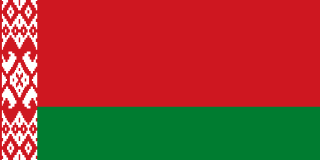
Overview
After seven decades as a constituent republic of the USSR, Belarus attained its independence in 1991. It has retained closer political and economic ties to Russia than any of the other former Soviet republics. In 1999, Belarus and Russia signed a treaty on a two-state union, envisioning greater political and economic integration. Although Belarus agreed to a framework to carry out the accord, serious implementation has yet to take place and negotiations on further integration have been contentious. Since taking office in 1994 as the country's first and only directly elected president, Alyaksandr LUKASHENKA has steadily consolidated his power through authoritarian means and a centralized economic system. Government restrictions on political and civil freedoms, freedom of speech and the press, peaceful assembly, and religion have remained in place. Restrictions on political freedoms have tightened in the wake of the disputed presidential election in 2020. The election results sparked large-scale protests as members of the opposition and civil society criticized the election s validity. LUKASHENKA has remained in power as the disputed winner of the presidential election after quelling protests in 2020. Since 2022, Belarus has facilitated Russia's war in Ukraine, which was launched in part from Belarusian territory.
Geography
- Location
- Eastern Europe, east of Poland
- Total Area
- 207,600 sq km
- Climate
- cold winters, cool and moist summers; transitional between continental and maritime
- Terrain
- generally flat with much marshland
- Natural Resources
- timber, peat deposits, small quantities of oil and natural gas, granite, dolomitic limestone, marl, chalk, sand, gravel, clay
- Coastline
- 0 km (landlocked)
- Land Borders
- 3,599 km
People & Society
- Population
- 9,460,972 (2025 est.)
- Religions
- Orthodox 48.3%, Catholic 7.1%, other 3.5%, non-believers 41.1% (2011 est.)
- Ethnic Groups
- Belarusian 83.7%, Russian 8.3%, Polish 3.1%, Ukrainian 1.7%, other 2.4%, unspecified 0.9% (2009 est.)
- Life Expectancy
- 74.7 years (2024 est.)
- Literacy Rate
- 99.9% (2019 est.)
- Urbanization
- 80.7% of total population (2023)
Government
- Government Type
- presidential republic in name, although in fact a dictatorship
- Capital
- Minsk
- Independence
- 25 August 1991 (from the Soviet Union)
- Constitution
- several previous; latest drafted between late 1991 and early 1994, signed 15 March 1994
- Legal System
- civil law system
- Executive Branch
- President Alyaksandr LUKASHENKA (since 20 July 1994)
Economy
- Economic Overview
- declining Russian energy subsidies will end in 2024; growing public debt; strong currency pressures have led to higher inflation; recent price controls on basic food and drugs; public sector wage increases and fragile private sector threaten household income gains and economic growth
- GDP (Official Rate)
- $75.962 billion (2024 est.)
- Major Industries
- metal-cutting machine tools, tractors, trucks, earthmovers, motorcycles, synthetic fibers, fertilizer, textiles, refrigerators, washing machines and other household appliances
Infrastructure & Communications
- Railways
- 5,528 km (2014)