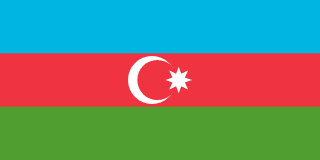
Overview
Azerbaijan -- a secular nation with a majority-Turkic and majority-Shia Muslim population -- was briefly independent (from 1918 to 1920) following the collapse of the Russian Empire; it was subsequently incorporated into the Soviet Union for seven decades. Beginning in 1988, Azerbaijan and Armenia fought over the Nagorno-Karabakh region, which was populated largely by ethnic Armenians but incorporated into Soviet Azerbaijan as an autonomous oblast in the early 1920s. In the late Soviet period, an ethnic-Armenian separatist movement sought to end Azerbaijani control over the region. Fighting over Nagorno-Karabakh escalated after Armenia and Azerbaijan gained independence from the Soviet Union in 1991. By the time a ceasefire took effect in 1994, separatists with Armenian support controlled Nagorno‑Karabakh and seven surrounding Azerbaijani territories. After decades of cease-fire violations and sporadic flare-ups, a second sustained conflict began in 2020 when Azerbaijan tried to win back the territories it had lost in the 1990s. After significant Azerbaijani gains, Armenia returned the southern part of Nagorno-Karabakh and the surrounding territories to Azerbaijan. In September 2023, Azerbaijan took military action to regain the rest of Nagorno-Karabakh; after a conflict that lasted only one day, nearly the entire ethnic Armenian population of Nagorno-Karabakh fled to Armenia.Since gaining its independence in 1991, Azerbaijan has significantly reduced the poverty rate and has directed some revenue from its oil and gas production to develop the country’s infrastructure. However, corruption remains a burden on the economy, and Western observers and members of the country’s political opposition have accused the government of authoritarianism. The country’s leadership has remained in the ALIYEV family since Heydar ALIYEV, the most highly ranked Azerbaijani member of the Communist Party during the Soviet period, became president during the first Nagorno-Karabakh War in 1993.
Geography
- Location
- Southwestern Asia, bordering the Caspian Sea, between Iran and Russia, with a small European portion north of the Caucasus range
- Total Area
- 86,600 sq km
- Climate
- dry, semiarid steppe
- Terrain
- large, flat Kur-Araz Ovaligi (Kura-Araks Lowland, much of it below sea level) with Great Caucasus Mountains to the north, Qarabag Yaylasi (Karabakh Upland) to the west; Baku lies on Abseron Yasaqligi (Apsheron Peninsula) that juts into Caspian Sea
- Natural Resources
- petroleum, natural gas, iron ore, nonferrous metals, bauxite
- Coastline
- 0 km (landlocked)
- Land Borders
- 2,468 km
People & Society
- Population
- 10,694,370 (2025 est.)
- Religions
- Muslim 97.3% (predominantly Shia), Christian 2.6%, other 0.1, unaffiliated 0.1 (2020 est.)
- Ethnic Groups
- Azerbaijani 94.8%, other 1.8%; less than 1%: Talish, Russian, Avar, Sakhur, Tartar, Georgian, Jewish, Kurd (2019 est.)
- Life Expectancy
- 75.9 years (2024 est.)
- Literacy Rate
- 99.8% (2023 est.)
- Urbanization
- 57.6% of total population (2023)
Government
- Government Type
- presidential republic
- Capital
- Baku (Baki, Baky)
- Independence
- 30 August 1991 (declared from the Soviet Union); 18 October 1991 (adopted by the Supreme Council of Azerbaijan)
- Constitution
- several previous; latest adopted 12 November 1995
- Legal System
- civil law system
- Executive Branch
- President Ilham ALIYEV (since 31 October 2003)
Economy
- Economic Overview
- upper-middle income, oil-dependent Caucasus economy; minimal economic diversification and dominance of state-owned enterprises; growth and fiscal consolidation supported by oil revenues, but risks remain from demand shocks; potential economic gains from Nagorno-Karabakh ceasefire; education investments to diversify and retain human capital
- GDP (Official Rate)
- $74.316 billion (2024 est.)
- Major Industries
- petroleum and petroleum products, natural gas, oilfield equipment; steel, iron ore; cement; chemicals and petrochemicals; textiles
Infrastructure & Communications
- Railways
- 2,944.3 km (2017)