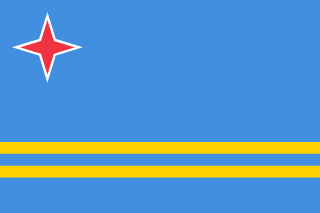
Overview
Discovered and claimed for Spain in 1499, Aruba was acquired by the Dutch in 1636. Three main industries have since dominated the island's economy: gold mining, oil refining, and tourism. A 19th-century gold rush was followed by prosperity brought on by the opening of an oil refinery in 1924. The last decades of the 20th century saw a boom in the tourism industry. Aruba seceded from the Netherlands Antilles in 1986 and became a separate, semi-autonomous member of the Kingdom of the Netherlands. Movement toward full independence was halted at Aruba's request in 1990.
Geography
- Location
- Caribbean, island in the Caribbean Sea, north of Venezuela
- Total Area
- 180 sq km
- Climate
- tropical marine; little seasonal temperature variation
- Terrain
- flat with a few hills; scant vegetation
- Natural Resources
- NEGL; white sandy beaches foster tourism
- Coastline
- 68.5 km
- Land Borders
- 0 km
People & Society
- Population
- 125,063 (2024 est.)
- Languages
- Papiamento (official) (a creole language that mixes Portuguese, Spanish, Dutch, English, French, African languages, and Arawak) 69.4%, Spanish 13.7%, English (widely spoken) 7.1%, Dutch (official) 6.1%, Chinese 1.5%, other 1.7%, unspecified 0.4% (2010 est.)
- Religions
- Roman Catholic 75.3%, Protestant 4.9% (includes Methodist 0.9%, Adventist 0.9%, Anglican 0.4%, other Protestant 2.7%), Jehovah's Witness 1.7%, other 12%, none 5.5%, unspecified 0.5% (2010 est.)
- Ethnic Groups
- Dutch 78.7%, Colombian 6.6%, Venezuelan 5.5%, Dominican 2.8%, Haitian 1.3%, other 5.1% (2020 est.)
- Life Expectancy
- 78.5 years (2024 est.)
- Urbanization
- 44.3% of total population (2023)
Government
- Government Type
- parliamentary democracy; part of the Kingdom of the Netherlands
- Capital
- Oranjestad
- Independence
- none (part of the Kingdom of the Netherlands)
- Constitution
- previous 1947, 1955; latest drafted and approved August 1985, enacted 1 January 1986 (regulates governance of Aruba but is subordinate to the Charter for the Kingdom of the Netherlands); in 1986, Aruba became a semi-autonomous entity within the Kingdom of the Netherlands
- Legal System
- civil law system based on the Dutch civil code
- Executive Branch
- King WILLEM-ALEXANDER of the Netherlands (since 30 April 2013); represented by Governor General Alfonso BOEKHOUDT (since 1 January 2017)
Economy
- Economic Overview
- small, tourism-dependent, territorial-island economy; very high public debt; COVID-19 crippled economic activity; partial recovery underway via tourism, benefitting from its high amount of timeshare residences; considering reopening oil refinery
- GDP (Official Rate)
- $3.649 billion (2023 est.)
- Major Industries
- tourism, petroleum transshipment facilities, banking