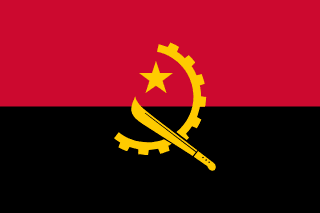
Overview
Bantu-speaking people settled in the area now called Angola in 6th century A.D.; by the 10th century various Bantu groups had established kingdoms, of which Kongo became the most powerful. From the late-14th to the mid-19th century, a Kingdom of Kongo stretched across central Africa from present-day northern Angola into the current Congo republics. It traded heavily with the Portuguese who, beginning in the 16th century, established coastal colonies and trading posts and introduced Christianity. Angola became a major hub of the transatlantic slave trade conducted by the Portuguese and other European powers -- often in collaboration with local kingdoms, including the Kongo. The Angola area is estimated to have lost as many as 4 million people as a result of the slave trade. The Kingdom of Kongo’s main rival was the Kingdom of Ndongo to its south, whose most famous leader was Nzingha Mbande, the 17th century diplomat to the Portuguese and later Queen, who successfully fought off Portuguese encroachment during her nearly 40-year reign. Smaller kingdoms, such as the Matamba and Ngoyo, often came under the control of the Kongo or Ndongo Kingdoms. During the Berlin Conference of 1884-85, Portugal and other European powers set Angola’s modern borders, but the Portuguese did not fully control large portions of the territory. Portugal gained control of the Kingdom of Kongo in 1888 when Kongo’s King Pedro V sought Portuguese military assistance in exchange for becoming a vassal. After a revolt in 1914, Portugal imposed direct rule over the colony and abolished the Kongo Kingdom. The Angolan National Revolution began in 1961, and in 1975, Angola won its independence when Portugal’s dictatorship fell, a collapse that occurred in part because of growing discontent over conflict in Angola and other colonies. Angola’s multiple independence movements soon clashed, with the Popular Movement for Liberation of Angola (MPLA), led by Agostinho NETO, taking power and the National Union for the Total Independence of Angola (UNITA), led by Jonas SAVIMBI, emerging as its main competitor. After NETO’s death in 1979, Jose Eduardo DOS SANTOS, also of the MPLA, became president. Over time, the Angolan civil war escalated and became a major Cold War conflict, with the Soviet Union and Cuba supporting the MPLA and the US and South Africa supporting UNITA. Up to 1.5 million lives may have been lost -- and 4 million people displaced -- during the more than a quarter-century of fighting. SAVIMBI's death in 2002 ended UNITA's insurgency and cemented the MPLA's hold on power. DOS SANTOS did not seek reelection in 2017 and supported Joao LOURENCO’s successful bid to become president. LOURENCO was reelected in 2022. Angola scores low on human development indexes despite using its large oil reserves to rebuild since 2002.
Geography
- Location
- Southern Africa, bordering the South Atlantic Ocean, between Namibia and Democratic Republic of the Congo
- Total Area
- 1,246,700 sq km
- Climate
- semiarid in south and along coast to Luanda; north has cool, dry season (May to October) and hot, rainy season (November to April)
- Terrain
- narrow coastal plain rises abruptly to vast interior plateau
- Natural Resources
- petroleum, diamonds, iron ore, phosphates, copper, feldspar, gold, bauxite, uranium
- Coastline
- 1,600 km
- Land Borders
- 5,369 km
People & Society
- Population
- 38,984,796 (2025 est.)
- Languages
- Portuguese 71.2% (official), Umbundu 23%, Kikongo 8.2%, Kimbundu 7.8%, Chokwe 6.5%, Nhaneca 3.4%, Nganguela 3.1%, Fiote 2.4%, Kwanhama 2.3%, Muhumbi 2.1%, Luvale 1%, other 3.6% (2014 est.)
- Religions
- Roman Catholic 41.1%, Protestant 38.1%, other 8.6%, none 12.3% (2014 est.)
- Ethnic Groups
- Ovimbundu 37%, Kimbundu 25%, Bakongo 13%, Mestico (mixed European and native African) 2%, European 1%, other 22%
- Life Expectancy
- 62.9 years (2024 est.)
- Literacy Rate
- 66.2% (2015 est.)
- Urbanization
- 68.7% of total population (2023)
Government
- Government Type
- presidential republic
- Capital
- Luanda
- Independence
- 11 November 1975 (from Portugal)
- Constitution
- previous 1975, 1992; latest passed by National Assembly 21 January 2010, adopted 5 February 2010
- Legal System
- civil legal system based on Portuguese civil law; no judicial review of legislation
- Executive Branch
- President Joao Manuel Goncalves LOURENCO (since 26 September 2017)
Economy
- Economic Overview
- middle-income, oil-dependent African economy; widespread poverty; rising inflation and currency depreciation; seeking diversification through agricultural production; significant corruption in public institutions; major infrastructure investments from China and US; exited OPEC in 2023
- GDP (Official Rate)
- $80.397 billion (2024 est.)
- Major Industries
- petroleum; diamonds, iron ore, phosphates, feldspar, bauxite, uranium, and gold; cement; basic metal products; fish processing; food processing, brewing, tobacco products, sugar; textiles; ship repair
Infrastructure & Communications
- Railways
- 2,761 km (2022)