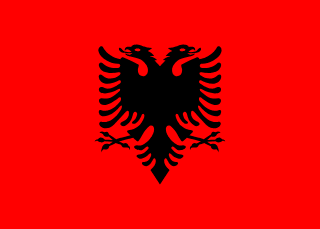
Overview
After declaring independence from the Ottoman Empire in 1912, Albania experienced a period of political upheaval that led to a short-lived monarchy, which ended in 1939 when Italy conquered the country. Germany then occupied Albania in 1943, and communist partisans took over the country in 1944. Albania allied itself first with the USSR (until 1960) and then with China (until 1978). In the early 1990s, Albania ended communist rule and established a multiparty democracy. Government-endorsed pyramid schemes in 1997 led to economic collapse and civil disorder, which only ended when UN peacekeeping troops intervened. In 1999, some 450,000 ethnic Albanians fled from Kosovo to Albania to escape the war with the Serbs. Albania joined NATO in 2009 and became an official candidate for EU membership in 2014.
Geography
- Location
- Southeastern Europe, bordering the Adriatic Sea and Ionian Sea, between Greece to the south and Montenegro and Kosovo to the north
- Total Area
- 28,748 sq km
- Climate
- mild temperate; cool, cloudy, wet winters; hot, clear, dry summers; interior is cooler and wetter
- Terrain
- mostly mountains and hills; small plains along coast
- Natural Resources
- petroleum, natural gas, coal, bauxite, chromite, copper, iron ore, nickel, salt, timber, hydropower, arable land
- Coastline
- 362 km
- Land Borders
- 691 km
People & Society
- Population
- 2,551,837 (2025 est.)
- Religions
- Muslim 56.7%, Roman Catholic 10%, Orthodox 6.8%, atheist 2.5%, Bektashi (a Sufi order) 2.1%, other 5.7%, unspecified 16.2% (2011 est.)
- Ethnic Groups
- Albanian 82.6%, Greek 0.9%, other 1% (including Vlach, Romani, Macedonian, Montenegrin, and Egyptian), unspecified 15.5% (2011 est.)
- Life Expectancy
- 79.9 years (2024 est.)
- Literacy Rate
- 97.7% (2023 est.)
- Urbanization
- 64.6% of total population (2023)
Government
- Government Type
- parliamentary republic
- Capital
- Tirana (Tirane)
- Independence
- 28 November 1912 (from the Ottoman Empire)
- Constitution
- several previous; latest approved by the Assembly 21 October 1998, adopted by referendum 22 November 1998, promulgated 28 November 1998
- Legal System
- civil law system except in the northern rural areas where customary law known as the "Code of Leke" is still present
- Executive Branch
- President Bajram BEGAJ (since 24 July 2022)
Economy
- Economic Overview
- upper-middle-income Balkan economy; EU accession candidate; growth bolstered by tourism, agriculture, mining, construction, and private consumption; fiscal consolidation through revenue collection and tax compliance enhancements to address public debt; challenges include weak governance, corruption, and high emigration rates
- GDP (Official Rate)
- $27.178 billion (2024 est.)
- Major Industries
- food; footwear, apparel and clothing; lumber, oil, cement, chemicals, mining, basic metals, hydropower
Infrastructure & Communications
- Railways
- 424 km (2017)