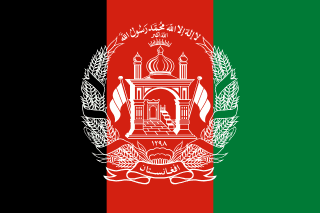
Overview
Ahmad Shah DURRANI unified the Pashtun tribes and founded Afghanistan in 1747. The country served as a buffer between the British and Russian Empires until it won independence from notional British control in 1919. A brief experiment in increased democracy ended in a 1973 coup and a 1978 communist countercoup. The Soviet Union invaded in 1979 to support the tottering Afghan communist regime, touching off a long and destructive war. Internationally supported anti-communist mujahidin rebels forced the USSR to withdraw in 1989. A series of subsequent civil wars saw Kabul finally fall in 1996 to the Taliban, a hardline Pakistani-sponsored movement. Following the 11 September 2001 terrorist attacks, a US and Allied military action toppled the Taliban for sheltering Usama BIN LADIN. A UN-sponsored Bonn Conference in 2001 established a process for political reconstruction that included the adoption of a new constitution, a presidential election in 2004, and National Assembly elections in 2005. In 2004, Hamid KARZAI became the first democratically elected president of Afghanistan, and he was reelected in 2009. Ashraf Ghani AHMADZAI succeeded him as president in 2014 following a disputed election. The Taliban conducted an insurgency for two decades against the Afghan Government and forces from the United States and other countries. In February 2020, the US and the Taliban signed an agreement that led to the withdrawal of international forces in exchange for commitments on counterterrorism and other assurances. The Taliban took over Afghanistan on 15 August 2021.The Taliban established an all-male interim leadership structure dominated by Pashtun clerics under the leadership of Haivatrullah AKHUNDZADA. The Taliban issued numerous edicts that constrained women's mobility, ability to study and work, and access to education beyond primary school. To date, no country has recognized the Taliban as the government of Afghanistan.
Geography
- Location
- Southern Asia, north and west of Pakistan, east of Iran
- Total Area
- 652,230 sq km
- Climate
- arid to semiarid; cold winters and hot summers
- Terrain
- mostly rugged mountains; plains in north and southwest
- Natural Resources
- natural gas, petroleum, coal, copper, chromite, talc, barites, sulfur, lead, zinc, iron ore, salt, precious and semiprecious stones, arable land
- Coastline
- 0 km (landlocked)
- Land Borders
- 5,987 km
People & Society
- Population
- 49,474,805 (2025 est.)
- Religions
- Muslim 99.7% (Sunni 84.7 - 89.7%, Shia 10 - 15%), other 0.3% (2009 est.)
- Ethnic Groups
- current, reliable statistical data on ethnicity in Afghanistan are not available; Afghanistan's 2004 Constitution cited Pashtun, Tajik, Hazara, Uzbek, Turkman, Baluch, Pashaie, Nuristani, Aymaq, Arab, Qirghiz, Qizilbash, Gujur, and Brahwui ethnicities; Afghanistan has dozens of other small ethnic groups
- Life Expectancy
- 54.4 years (2024 est.)
- Literacy Rate
- 37.3% (2021 est.)
- Urbanization
- 26.9% of total population (2023)
Government
- Government Type
- theocratic; the United States does not recognize the Taliban Government
- Capital
- Kabul
- Independence
- 19 August 1919 (from UK control over Afghan foreign affairs)
- Constitution
- several previous; latest ratified in 2004, but not currently enforced by the Taliban
- Legal System
- the Taliban is implementing its own interpretation of Islamic law, which is partially based on the Hanifi school of Islamic jurisprudence and have enforced strict punishments; before the Taliban takeover, Afghanistan had a mixed legal system of civil, customary, and Islamic law (2021)
- Executive Branch
- Taliban Leader HAYBATULLAH Akhundzada (since 15 August 2021)
Economy
- Economic Overview
- low-income South Asian economy; economy stable after major contraction due to Taliban takeover, but recovery remains fragile; widespread poverty and obstacles to human development; import-reliant for food, fuel, and machinery; ongoing sanctions, suspended development aid, and frozen reserve assets
- GDP (Official Rate)
- $17.152 billion (2023 est.)
- Major Industries
- small-scale production of bricks, textiles, soap, furniture, shoes, fertilizer, apparel, food products, non-alcoholic beverages, mineral water, cement; handwoven carpets; natural gas, coal, copper